


5 Secrets to Building a Strong and Healthy World-Class Singing Voice

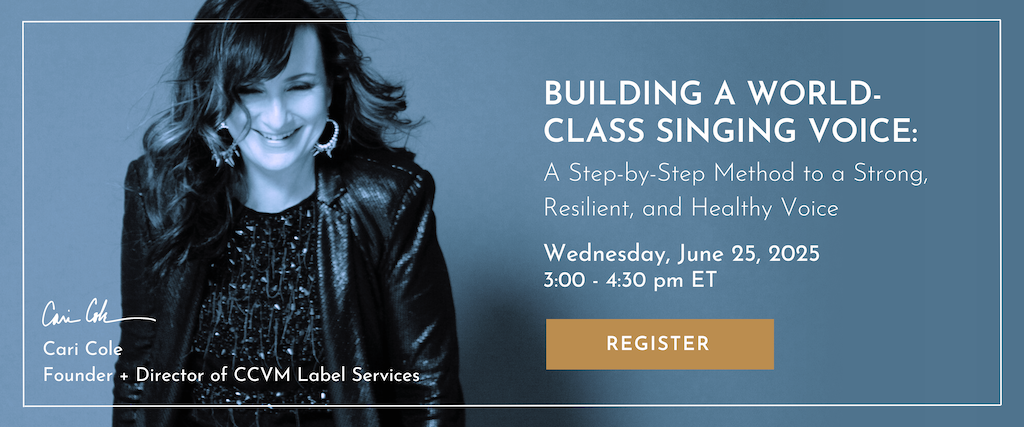
GET ACCESS TO MY LATEST FREE MASTERCLASS: This post helps you get started, but it’s only the beginning. What would it feel like to finally reach your vocal potential and feel an actual transformation in your voice? I’ve laid out all of the steps to building the right foundation for building a strong and healthy foundation for your voice in my latest masterclass: Building a World-Class Voice: A Step-by-Step Method to a Strong and Healthy Award-Winning Voice. Click here to get access.
5 Secrets to Building a Strong and Healthy World-Class Singing Voice
Building a strong and healthy world-class singing voice is achievable through training your voice with the right vocal method and technique.
To really sing, you have to know what you are doing. You can only wing it for so long.
Once you discover how to use the voice correctly—you can not only deliver the full expression of what you have inside—it will last forever.
Imagine the sound that is waiting for you.
I had no idea the level of vocal ability achievable through training until I dove in. Went from singing at farmers markets to a standing ovation at Town Hall! Astounding!
The trick is knowing that not all vocal techniques are built the same and finding the right one that has an in-depth process, addresses biomechanics, and is based in vocal science.
Building vocal strength and freedom in the singing voice is the goal of every singer. To be able to hit high notes with ease and precision and to be able to last singing for hours while amazing your audience is the ticket to a successful career as a vocalist and music artist..
Understanding and implementing biomechanics in vocal technique is the fastest —and most solid way —to improve your vocal strength and develop real vocal skills and freedom in singing.
Here are 5 Secrets to Building a Strong and Healthy World-Class Singing Voice – a good head start on your journey to stepping into your full vocal potential!
1. Identify what muscles are working to create sound
One of the first things is to identify which muscles are functioning to produce sound. Which muscles are over-functioning and which are under-functioning? Over-functioning muscles are referred to as “compensatory muscles.”
Common compensatory muscle patterning is a complex name for a relatively straightforward process. When primary muscles do not work properly in movement, the brain tells other muscles to perform that movement instead.
- Which muscles are over-functioning to compensate for a weakness elsewhere
- Which muscles are under-functioning that need to be more active for the singer to really step into their full potential.
To identify which compensatory muscles are over-functioning:
Try this:
- Stand in front of a mirror and watch as you sing looking to identify what muscles are engaging.
- Do you see your neck muscles tightening as you sing? This signifies the over-functioning of the neck muscles.
- Is the jaw clenching or closing when you sing? This signifies the over-functioning of the jaw muscles.
- Is your head or chin jutting forward as you sing? This signifies the over-functioning of the back of the neck muscles in singing.
- Are your eyebrows rising when you sing higher? This signifies the over-functioning of facial muscles.
- Is your tongue reaching forward when you sing? This signifies the over-functioning of the front of the tongue.
Jot down what you notice.
Try singing while engaging one muscle group that is over-functioning less.
The muscles and movements mentioned above are considered “compensatory” muscles that compensate for a weakness in the primary muscles we use in healthy vocal technique.
One of the first things is to identify which muscles are functioning to produce sound. Which muscles are over-functioning and which are under-functioning? Over-functioning muscles are referred to as “compensatory muscles.”
Common compensatory muscle patterning is a complex name for a relatively straightforward process. When primary muscles do not work properly in movement, the brain tells other muscles to perform that movement instead.
- Which muscles are over-functioning to compensate for a weakness elsewhere
- Which muscles are under-functioning that need to be more active for the singer to really step into their full potential.
To identify which compensatory muscles are over-functioning:
Try this:
- Stand in front of a mirror and watch as you sing looking to identify what muscles are engaging.
- Do you see your neck muscles tightening as you sing? This signifies the over-functioning of the neck muscles.
- Is the jaw clenching or closing when you sing? This signifies the over-functioning of the jaw muscles.
- Is your head or chin jutting forward as you sing? This signifies the over-functioning of the back of the neck muscles in singing.
- Are your eyebrows rising when you sing higher? This signifies the over-functioning of facial muscles.
- Is your tongue reaching forward when you sing? This signifies the over-functioning of the front of the tongue.
Jot down what you notice.
Try singing while engaging one muscle group that is over-functioning less.
The muscles and movements mentioned above are considered “compensatory” muscles that compensate for a weakness in the primary muscles we use in healthy vocal technique.
2. Reduce tension at the instrument and surrounding muscles
Tension in the vocal instrument and surrounding muscles will cause issues with strong healthy vocal production and cause constriction limiting range and overall sound.
We start by reducing the tension at the instrument and in the surrounding muscles as well as stripping away the compensatory muscles by retraining them to disengage through a series of movements and positions.
Try this:
- From the exercise 1 above, you identified what muscles are over-functioning.
- Now sing again in front of the mirror without engaging or using those muscles.
- The first step at reducing the “over-functioning” of the compensatory muscles is to monitor their involvement and train the body to disengage from using them.
3. Align the “Vocal Path”
Next up, we want to align the posture to support correct vocal production. Posture plays an important part in the Vocal Path. Most people have a slightly slumped chest and a forward head. This causes issues for singers as it prevents them from breathing deeper into the diaphragm and causes a disconnection from the support of the chest and torso of the body in singing.
Postural alignment affects the “vocal path” of the sound. Poor posture will thwart the vocal path and cause tensions to arise that affect overall vocal production.
Try this:
- Stand evenly in the center of both feet
- Soften your knees so they are not locked
- Scarecrow: Head sitting on top of spine
- Tuck your pelvis slightly underneath you
- Pull up tall out of the waist
- Shoulders at rest (heavy): down and back
- Lengthen the cervical spine (neck)
- Lift the base of your skull up towards the ceiling
- The head is level + placed over your body (not in front of)
- The chin slightly tipped down to achieve a level head position and a long cervical spine
This alignment practiced during vocal technique helps to clear the “vocal path” for the voice improving the ease of vocal production.
4. Develop the correct positions for the voice to produce sound without strain
Using the right positions in vocal technique, we can improve vocal production, sound, resonance, range—all of the elements of a healthy singing voice.
These positions inside of the Cole Vocal Method help to strip away the compensatory muscles, and nurture the activity in the core muscles improving vocal strength, tone and overall production.
The correct positions continue to strip away the compensatory muscles and target a freer, more balanced technique unencumbered by the tensions and lack of support by poor posture.
Try this:
- Hold your jaw with your hand on your chin.
- Let your jaw fall open.
- Pull your jaw open another inch.
- Inhale and exhale from your mouth keeping this position.
- Say “Kah” without closing your jaw.
- Then say “Kah, kay, kee” without closing your jaw
- Then sing “Kah, kay, kee” on one pitch without closing your jaw.
- Try with all of the vowels “Kah, kay, kee, ki, koh, koo” without closing your jaw.
Ideally your tongue articulates the vowels while your jaw stays in a dropped position throughout singing. This is something that will instantly give more sound to your voice. It is something that is practiced over time in technique to execute naturally.
There are many different positions we use to improve the functionality of the vocal mechanism inside the Cole Vocal Method. Learn more here.
5. Build laryngeal depth to keep the voice supported correctly and reduce tension at the throat
The position of the larynx affects vocal production quite a bit. As you ascend in pitch the larynx tends to get pushed upwards. In a well-trained voice, this movement is minimized providing a more stable larynx allowing for smoother register shifts.
Untrained singers generally have little to no control of this area. Even in trained singers I often find higher laryngeal position due to over singing and a lack of technique.
Try this:
- Place your finger at the top of your throat
Yawn - Did you feel the throat slip down?
- Now keeping your finger there, gently pull the jaw open with your hand
- Did you feel the throat slip down?
- Now bring an imaginary glass of water to your lips and pretend to drink
- Did you feel the throat slip down?
- This is a motion you do every day that you want to get in your reflexes
This is a motion singers use before they sing to open the throat and drop the larynx. A deeper position for the laryngeal muscles during singing helps to stabilize the voice during singing achieving smoother transitions in the passaggio.
Additional pieces to building a strong and healthy voice I’ll cover more in depth at my FREE TRAINING that you can watch here.
- Isolating the core vocal muscles to coordinate healthy vocal production
- Developing vocal fold closure for better vocal production, tone, and control
- Voice building techniques to build the Legato Line and Overtone Series
- Conditioning exercises to reduce inflammation that accumulates from oversinging
- Advanced techniques to develop all of the finer advanced aspects of the voice
Learning the The Cole Vocal Method™
The Cole Vocal Method™ is a complete master vocal method based in biomechanics, 38 years of vocal mastery, 40 years of vocal science, and over 100 years of application. This method is based in Bel Canto techniques from the true Italian schools of singing. It addresses the core mechanics and function of the voice dramatically improving sound, strength and resilience. With the health of the voice baked into the foundation of the technique, it also protects singers vocal health and longevity with conditioning elements that reduce wear and tear and strain.
Here’s how to learn the Cole Vocal Method™:
- Level I: There are three ways to start.
- Part 1 of the Cole Vocal Method™ starts with the Singers Gift Vocal Warmups. Click here to learn more.
- Learn the complete foundation of the Cole Vocal Method™, Parts 1 – 4 that are taught in depth inside the Vocal Freedom Circle (VFC). To learn more about VFC – click here.
- You can also learn the complete foundation of the Cole Vocal Method™, Parts 1 – 4 in private sessions with Cari Cole. Start with a 30 minute Vocal Analysis Learn more – click here.
- Level II: Level II of the Cole Vocal Method™ is taught inside the Vocal MasteryProgram (VMP). This program is for singers interested in learning the next level of the method and for vocal coaches who want to get certified to teach the method. VFC is a pre-requisite for VMP. Join the waitlist here.
- Level III: Level II of the Cole Vocal Method™ is taught inside the Vocal Mastery Program Year 2. This is for singers who want to learn the advanced level of the method and for vocal coaches who want to get Master Certification to teach the method. Level III registration opens in 2025. Level I and II is a prerequisite for Level III.
Experience the method inside my Free 4-1-hour Workshops, The Better Voice Challenge. Learn more here.

JOIN OUR WEDNESDAY LIVESTREAM with Cari Cole: JOIN ME EVERY WEDNESDAY AT 12 pm Eastern for my Weekly Livestream: Join me on YouTube (and Instagram, Facebook) – where I discuss the Blog of the Week followed by a short Q&A where you can ask me questions.


This post helps you get started, but it’s only the beginning. What would it feel like to finally reach your vocal potential and feel an actual transformation in your voice in 8 weeks? Come join the thousands of singers who have already transformed their voice and vocal health with the Cole Vocal Method™. Set your voice free in only 20 minutes a day with these transformative vocal techniques found only here! Click here to find out more.

Related
Share this post
Categories

Hi, I’m Cari Cole.
You’ve got talent, but you want to become great at it. You’re in the right place! My mission is to help you refine your unique artist vision to bring to the world.
INSTANT ACCESS
VOCAL HEALTH QUIZ
Assess your vocal health + heal your voice with my quick quiz + guide!

by Celebrity + Holistic Vocal Coach, Cari Cole

About Cari Cole
Cari Cole is the CEO / Founder of caricole.com and CCVM: Label Without Walls. She is a Holistic Vocal Coach, Artist Development Expert, A&R Director, and Songwriter based in New York City helping artists for the past 38 years. She is a mentor for Women in Music and The Association of Independent Music Publishers.
Her latest venture, CCVM a label services company, provides artists with a seamless path from creation to completion. After 30+ years of observing the overwhelm and challenges that artists face, Cari pulled together the best top creative professionals and designed a new approach to supporting our artists.
Disclaimer:
The information provided on Cari Cole's website is informational only and should not be used for diagnosing or treating a health problem or disease. Those seeking personal medical advice should consult with a licensed physician. Always seek the advice of your doctor or other qualified health provider regarding a medical condition. Never disregard professional medical advice or delay in seeking it because of something you have read on Cari Cole's website. If you think you may have a medical emergency, call 911 or go to the nearest emergency room immediately.