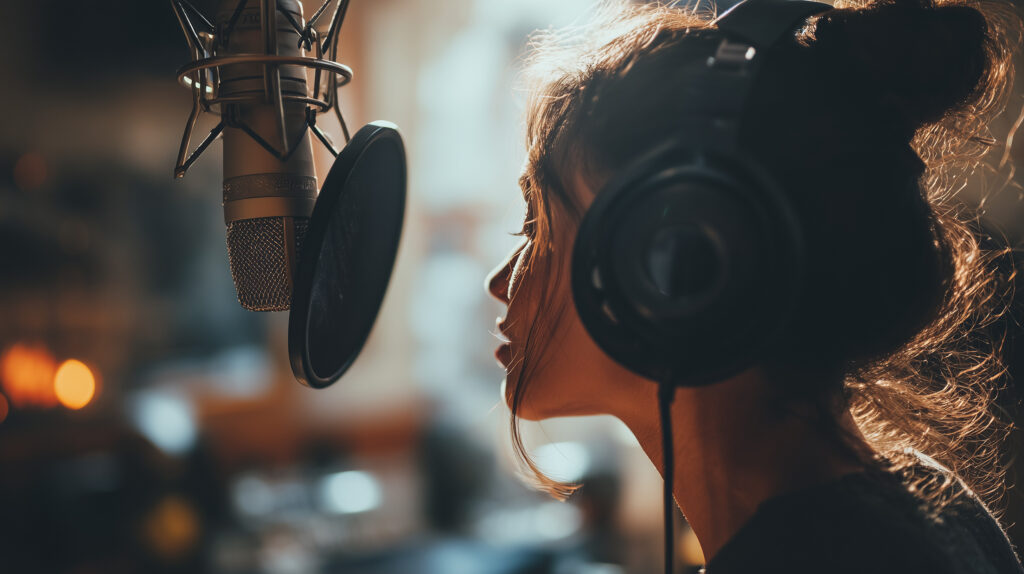
Here is the truth that most home recording guides won’t tell you: the microphone doesn’t lie.
Every tension, every inconsistency in tone, every note slightly off center: the mic finds all of it. The best room treatment and the most expensive condenser cannot fix a voice that is not ready. But a voice you have prepared, arranged, and trained will sound extraordinary through almost anything.
This is what separates home recordings that sound professional from the ones that don’t. Not the gear. The voice — and the work that happens before record is ever pressed.
Here are the five things that make the biggest difference.
1. Train Your Voice Daily — the Mic Rewards Consistency
The voice you bring into a recording session is built in the days and weeks before it. Not the morning of. Not the hour before. The daily practice that has been either strengthening or quietly eroding the instrument all along.
A trained voice records differently than an untrained one in ways that are immediately audible. The tone is more consistent take to take. The pitch lands more reliably at the center of the note rather than nudging sharp or flat under the pressure of repetition. The high notes are there when they’re needed, not precarious or effortful. The voice holds up through multiple takes without thinning or fatiguing in ways that force you to stop and rest between rounds.
This is what a daily vocal practice builds — not just a better voice for performance, but a more reliable, more recordable instrument. Twenty minutes a day of structured voice-building work through the Cole Vocal Method compounds over weeks and months into a voice that the microphone rewards. Every session is an investment in what the recording will capture.
If you’re planning a recording project, start your daily practice now. The voice you have on session day is being built today.
2. Do Your Vocal Arranging Before You Step to the Mic
This is the most overlooked secret in home recording — and the one that makes the most dramatic difference in how professional the final vocal sounds.
Vocal arranging is the art of shaping how you sing a song: which notes you hold and which you release, where you place vibrato, which syllables carry the emotional weight, where you add a run and where you pull back to simplicity, how the chorus differs from the verse in texture and intensity. It is the architecture of your vocal performance — and without it, most singers record the same instinctive first draft take after take, wondering why it never quite sounds the way they hear it in their head.
Professional recordings sound the way they do because the singer arranges the vocal first. Every choice is intentional. The singer shapes every phrase in advance. They arrive at the mic knowing exactly what they are going to do. That means the takes stay consistent and the emotion holds steady from one to the next. The producer never has to wait while the clock runs and the singer hunts for the performance.
Here is a simple example of what one arranging decision can do. Imagine a lyric that carries the song’s most emotional word — say, the word “gone” at the peak of a chorus. The instinct is to hold it out with full vibrato, to let the voice swell. But sometimes pulling back to a clean straight tone on exactly that word — no vibrato, no embellishment, just the raw note — lands with far more impact than the ornamented version. The restraint creates the emotion. That is a vocal arranging decision. And it is the kind of choice that separates a performance that moves people from one that simply sounds good.
Before your next recording session, sit with your song and make every decision in advance. Mark your lyric sheet. Circle the notes you’ll hold. Write in the breaths. Map the moments of restraint and the moments of release. Work with a vocal arranger if you can — the difference between an arranged vocal and an unarranged one is the difference between a record and a demo.
This work is one of the core skills taught inside the Voice Youniversity Intensives, launching August 26th, for singers who want to go deep into the craft of shaping their vocals for recording. Join the waitlist now at caricole.com/voice-youniversity
3. Arrive at the Mic Warmed Up — Not Warmed Out
How you arrive at the microphone determines everything the mic captures in the first hour of recording. And most home recording singers get this wrong in one of two directions.
The first mistake is recording cold — rolling out of bed, making coffee, and opening the DAW without any vocal preparation. The voice is stiff, the tone is uneven, the high notes are unreliable, and the first several takes are essentially warmup takes that rarely make the final edit.
The second mistake is warming up too hard before a session — belting through songs, running full-volume exercises, arriving at the mic with a voice that has already been working for an hour and has nothing left in reserve for the real takes.
The goal is to arrive warmed up but fresh. The Singer’s Gift Vocal Warmups inside the CVM App are designed for exactly this — a guided 20-minute sequence that opens the instrument, releases tension, and brings the voice to its optimal state without taxing it. Run your warmup, give the voice ten minutes to settle, then record. The difference in your first take compared to recording cold is immediately audible.
4. Use Marking to Protect Your Voice Through Multiple Takes
Recording is physically demanding in a way that surprises most singers the first time they experience a serious session. Take after take of the same phrase, the same high note, the same emotionally intense chorus — repeated with full commitment, over hours, is a significant vocal load. Singers who don’t know how to manage it arrive at the best take of the day with a voice that’s already spent.
Marking is the technique that changes this. It means rehearsing and running through sections at roughly 60 percent volume — with tone, not breathy, but deliberately lighter than full performance volume. Marking trains the muscle memory of the phrase without the full physical cost of performing it. You nail the intervals, the phrasing, the arrangement choices — and when the mic is live and the take is real, the voice is fresh enough to deliver it with everything it has.
One of my students became so committed to marking that it changed the trajectory of his entire vocal development. He was more disciplined about it than almost any singer I’ve worked with — using it consistently in every rehearsal, every run-through, every preparation session. What happened surprised even me. His voice improved more rapidly than students who sang full out every time. The muscular coordination developed faster, the pitch became more reliable, the instrument strengthened without the cumulative fatigue that holds so many singers back. He went on to make it all the way to the Finale on The Voice. Marking was a foundational part of how he built that voice. Use it the same way — not as a shortcut, but as the discipline that makes the full voice better when it matters most.
Use marking for any section you’re repeating more than twice. Save the full voice for the takes that count. Your final vocal will be better for it — and so will your voice the following morning.
5. Record Regularly — Not Just When You Have a Project
The singers who record the best vocals are not always the most talented ones in the room. They are the most comfortable ones. Comfort matters in front of the mic, and it matters just as much when you hear yourself in headphones. It matters most with the self-consciousness that recording produces, because that feeling is what shuts a performance down. You notice every imperfection, and the noticing takes over before you have sung a note.
That comfort comes from repetition. From recording regularly — not just when you have a project, but as part of your ongoing practice. Demos, voice memos, rough tracks, experimental recordings that you never intend to release. Every session in front of a mic is training the nervous system to stay open and present rather than contract under the pressure of being captured.
The singers who walk into a session and deliver on the first few takes are the ones who have been recording all along. The mic is familiar territory. The headphone mix doesn’t throw them. The self-consciousness has been worn down by experience until what’s left is simply the voice and the song.
Combine regular recording practice with a daily vocal training routine and the result is a singer who is both technically ready and psychologically ready when the session that matters most arrives.

“My voice is now a stronger instrument that I had the pleasure of testing next to the world’s most beloved tenor, Andrea Bocelli. I was able to reach high notes with such power that the press spent thirty minutes interviewing me. As they picked my brain for how I did it, I could only say: Cari Cole and the Cole Vocal Method.”
— Cristal Marie
Preparation at that level doesn’t happen in a week. It’s built every day.
Learn more about the Cole Vocal Method here.

P.S. Voice Youniversity opens August 26th — including Intensives in vocal arranging and the complete craft of recording your best vocals. Join the waitlist now at caricole.com/voice-youniversity