

6 Ways to Prepare Your Singing Voice for an Important Performance or Recording Session

This post helps you get started, but that’s only the beginning. What would it feel like to sing your heart out with a transformed voice performing to thousands of people by the end of the year? Come join the tens of thousands of singers who have already transformed their voices with my Singers Gift Warmups. Set your voice free in just 20 minutes a day with these revolutionary techniques found only here! Click here to find out how.
Preparing for an important performance makes a huge difference in vocal production during performance. Your voice is an instrument inside of your body and the state of your body affects your voice. Plus you want to really rehearse your material in the right way to elevate your vocals and get the most out of your voice whether on stage or in the studio.
Here are some of the methods I’ve used for over 30+ years to help voices like yours excel in performance and some resources for you. Let me know how it goes!
1. Start your preparation as early as you can
The best thing you do as a singer and performer is to be prepared. Start your preparation ahead of time.
For an important performance start your preparation as much as 3 months prior.
For an important recording start your preparation as much as 6-9 months prior.
The truth is, most stagefright or performance anxiety comes from a lack of preparation. When you prepare the technical aspects of your performance (hitting notes, lyrics etc) operate on auto-pilot so you are free to concentrate on your performance.
Rehearse your songs or set daily for a month prior to your performance, 5x a week. Find the right key – this seems obvious but you’d be surprised how many singers don’t think of it. Even one half step up or down makes a huge difference in the vocal performance. Work on your vocal arrangement – how you will sing the song. Where you put vibrato, oohs and ahs, where you embellish. Look for peak moments with high notes or runs to build a climax for the audience.
2. Use vocal technique to build the sound, range, and tone of your voice
Your voice is an instrument. The quickest way to improve your voice in performance and on record is to train with vocal technique to open up your voice, decrease tension, increase strength and improve tone, range, breath and high notes. Training will not take away your style, it will only improve your voice.
Start with my Singers Gift Vocal Warmups. I’ve designed it to open your voice pre-show.
“I have most all of the best vocal practice programs out there. Cari’s “Singer’s Gift” is my go-to program every day – particularly before concerts. No other program gets my voice into its best shape so fast. In minutes, I have great power, dexterity, tone, and dynamic. I’ve used it hundreds of times, and I still love it!” Thank you, Cari! ~Alyse Black
We have found over decades of testing that 20 minutes a day, 5 days a week is proven to give better results than longer more infrequent practices.
Here are my recommendations:
- Schedule your practice right into your calendar. “Live the calendar”. Make it non-negotiable.
- Do your vocal technique exercises in the morning so it is done for the day. Just like working out, it’s best to practice in the morning. If that’s not possible, then do it first thing when you get home from work.
- Later in the day, rehearse your songs. 30 minutes, 5 days a week to work on your songs.
- Here’s my recommended schedule:
- Morning:
Vocal technique practice: 20 minutes a day, 5 days a week. - Evening:
Rehearse songs: 30 minutes a day - Once a week:
Demo vocal arrangements 1x week, 2-3 hours per week.
- Morning:
3. Design your vocal arrangement
To prepare a singer for an important performance or recording, I like to work out the vocal arrangements of each song ahead of time. It gives the singer an opportunity to work out all the kinks, get inside the song, and get comfortable. We fix any issues with pitch & pronunciation, tweak phrases to sit just right, build the dynamic melodic arc of the song to build the emotion and we smooth out kinks and to get the singer sounding their very best. And no, you won’t lose the magic by preparing ahead of time ;). You’ll only gain ~ guaranteed.
Here’s what recording artist Robyn Cage said after our vocal arranging sessions in preparation for her record:
“Recording vocals is always super personal. There’s always that feeling of vulnerability, and nervous excitement — to tap into that memory and pull up those emotions so they are present in the music. One of the vocal coaches I work with is Cari Cole, in New York City. She’s also a vocal arranger. A vocal arranger goes through every single word, vowel, syllable, phrase and accent, until it’s as good as it can possibly be. But the amazing thing about this experience, is that it helped bring out the emotion. I thought I would be overthinking it, and it wouldn’t be organic anymore, but it was actually the exact opposite. It actually freed up the emotion in the song.”
4. Record your arrangement
The best way to cement the new arrangement into your voice is to make a home demo. Then you can listen to that recording to help memorize the new movements and get more comfortable with the melody.
Spend the time to demo your arrangement well. If you have your own DAW I recommend recording and editing a good vocal comp of your arrangement. If you aren’t adept at home recording you can at least get it down on your phone. Working with a DAW is easier and saves time as you can edit, cut and paste phrases and sections instead of singing so many takes.
Home recording equipment recommendations:
- Microphone: Shure SM7b
- Interface: Universal Audio Apollo Twin
Recording software:
- Apple:
- Logic Pro
- Pro Tools
- Garageband (free with Mac)
- PC:
- Pre Sonus Studio 1 5 (PC / Apple)
- Ableton (PC / Apple)
- Reaper
Pitch correction plug in:
- Melodyne (top recommendation!)
- Auto-tune
You can start with recording on your phone. Then upgrade to a microphone and then get a piece of equipment one at a time to build your studio. If you have a Mac get Logic ($199).
6. Use mindset and visualization to dramatically improve your performance
Mindset and visualization are extremely useful modalities in preparation for an important performance or recording.
Mindset plays such a critical role in performance. Do you find your mindset fluctuating between excitement about the performance and anxiety? Positive one day, anxious the next? Do you vascillate between confidence one day and or self-doubt the next? We tend to worry about our performance, wondering how our voice will perform on that day, and whether we’ll be able to hit the high notes and deliver on cue. It’s normal.
But with the right preparation (listed above) and mindset you can turn those fears around.
Try programming positive messages into your mindset. It doesn’t matter whether you believe them or not. The sub-conscious mind listens to the conscious mind. Any positive messages will be heard and acted upon.
Alongside mindset, a practice of visualization will improve your outcome. Studies have shown that athletes improve their performances up to 30% using visualization.
The greatest impact comes when visualization is used in conjunction with a disciplined training schedule. The idea is that if you consistently mentally rehearse performance scenarios or specfic actions, physical performance of those scenarios and actions will improve.
Visualization is the practice of mentally imagining yourself performing the way you would like to perform them in real-life. It’s a mental rehearsal of skills, specfic gameday scenarios, racing in new venues, or performing at the top of your ability while under pressure.
I started using these techniques with singers years ago when I started studying visualization techniques used with Olympic athletes. Spend 10 minutes every day leading up to an important performance running through the set, arriving at the venue/studio, singing or performing your songs, visualizing hitting all of the right notes. It’s best to visualize in real-time so I would visualize 2 songs per day and swap songs out each day to hit the full set. Let me know how it goes!
Click here to visit my YouTube channel for videos on voice and mindset for more help!
6. Take care of your voice prior to performance or recording
The weeks leading up to performance can make a big difference in performance. Your voice is an instrument inside of your body. The state and health of your body will determine the success of your performance.
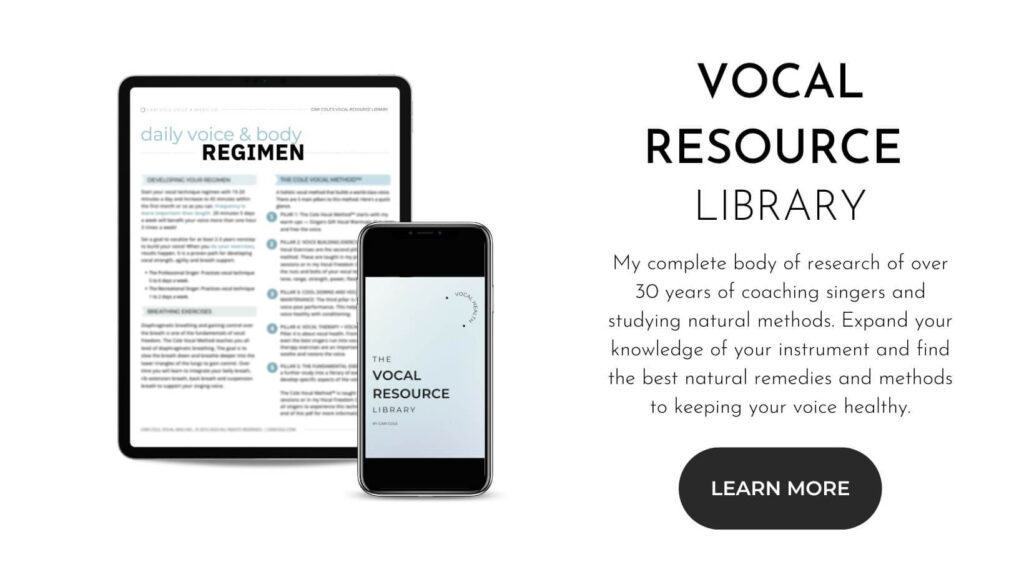
Follow my Three Day Rule for exactly what to stay away from and what to do for the three days prior to performance. To get my latest most updated Three Day Rule, get a copy of my Vocal Resource Library that comes with my natural remedies to keep your voice health.
To get my full regimen get a copy of my Ultimate Performer Guidebook with a complete “day of” preparation and mindset tools for your performance.

Related
Share this post
Categories

Hi, I’m Cari Cole.
You’ve got talent, but you want to become great at it. You’re in the right place! My mission is to help you refine your unique artist vision to bring to the world.
INSTANT ACCESS
STEP UP TO THE SPOTLIGHT
6-Week Kickstart Artist Development Program
Win Awards, Gain
Notoriety, and Industry
Recognition.



About Cari Cole
Cari Cole is the CEO / Founder of caricole.com and CCVM: Label Without Walls. She is a Holistic Vocal Coach, Artist Development Expert, A&R Director, and Songwriter based in New York City helping artists for the past 38 years. She is a mentor for Women in Music and The Association of Independent Music Publishers.
Her latest venture, CCVM a label services company, provides artists with a seamless path from creation to completion. After 30+ years of observing the overwhelm and challenges that artists face, Cari pulled together the best top creative professionals and designed a new approach to supporting our artists.
Disclaimer:
The information provided on Cari Cole's website is informational only and should not be used for diagnosing or treating a health problem or disease. Those seeking personal medical advice should consult with a licensed physician. Always seek the advice of your doctor or other qualified health provider regarding a medical condition. Never disregard professional medical advice or delay in seeking it because of something you have read on Cari Cole's website. If you think you may have a medical emergency, call 911 or go to the nearest emergency room immediately.